From Paper Checks to AI: The Evolution of Verification
Introduction
The only constant in the world is change. As individuals and as a society, we continuously evolve, adapting to new ideas, technologies, and ways of living. The discovery and use of the internet are among the most significant shifts in human history, and now the rise of artificial intelligence (AI) is driving the next evolution in how we live, work, and interact.
While this change may not always feel immediate, it is slowly entering our everyday lives in ways we are only beginning to understand.
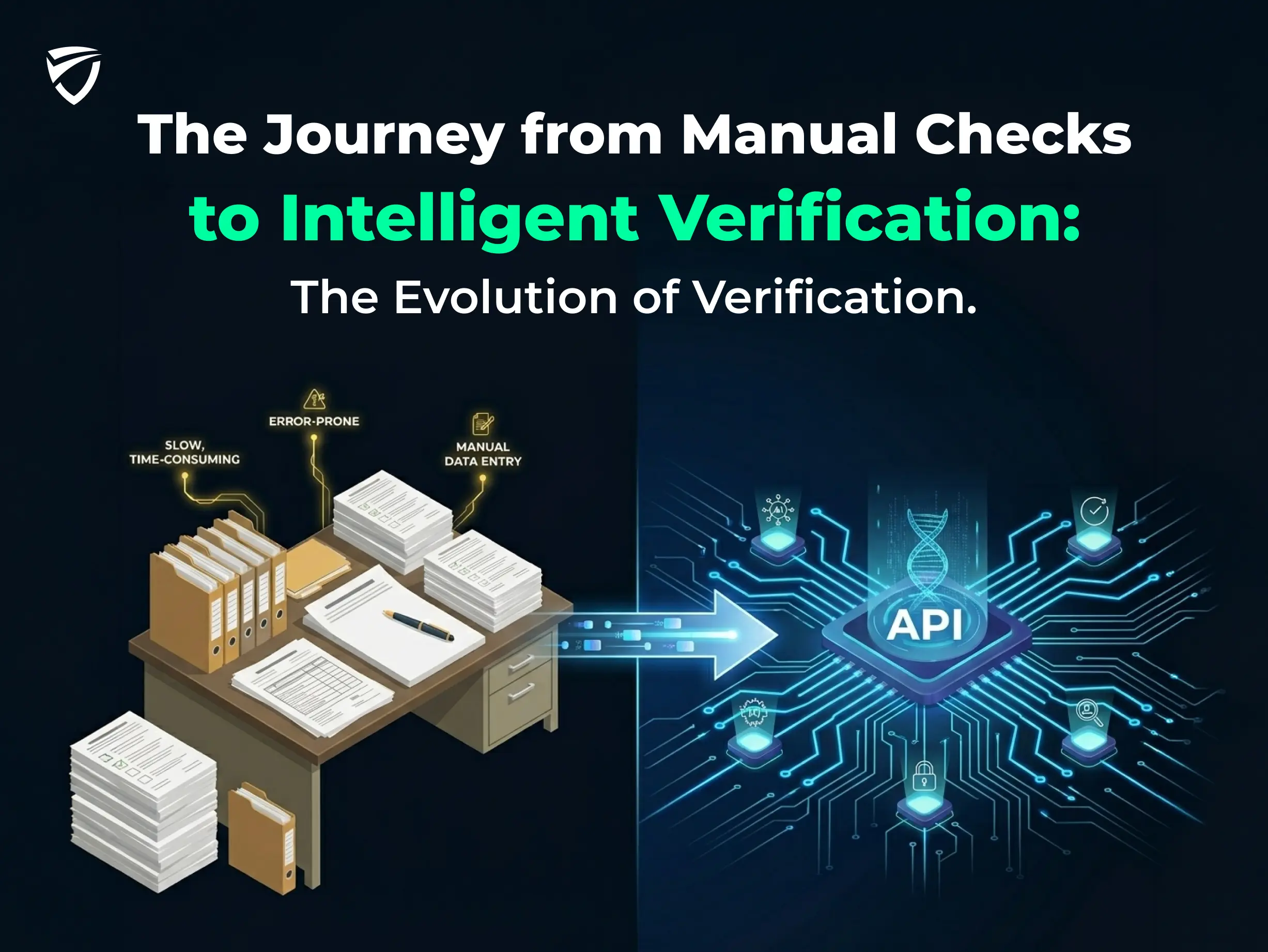
One of the most significant transformations is the shift from paper-based processes to digital ones. Traditionally, document verification consumed a large portion of an organisation's time and resources. Whether it involved legal papers, government IDs, or official records, manual verification was often slow, complex, and prone to inefficiencies.
Today, technology, especially AI, has dramatically simplified this process. In this blog, we explore how AI fraud detection is redefining accuracy and building trust among the users.
Traditional Ways of Verification
Trust lies at the core of every business, whether it involves employees, customers, or partners. A critical part of building this trust is verification, commonly known as KYC (Know Your Customer). Without proper verification, businesses risk financial loss, compliance issues, and reputational damage.
Traditionally, this process involved several time-intensive steps:
- In-person KYC: Customers were required to visit physical offices to complete their document verification.
- Manual document verification: Officers examined documents, sometimes using tools like UV or blue light, to detect tampering or forgery.
- Background checks: These often included physical visits to a person's residence, conversations with neighbours, and verification calls to workplaces.
- Paperwork: Multiple forms and supporting documents were required to establish credibility and trustworthiness.
Though this process is effective to an extent, these methods were often slow, resource-heavy, and inconvenient for both businesses and customers.
The Digital Way of Verification
With the rise of digital ecosystems, such as online banking, digital payments, and app-based services, verification processes have evolved as well.
Here's how modern verification works today:
- Digital verification: Users can now complete KYC by uploading documents online, such as Aadhaar and PAN, along with a photograph, making the process faster and more accessible.
- Live image capture & facial verification: Applications can capture real-time images, helping verify identity, detect spoofing, and ensure authenticity.
- AI-powered background checks: Advanced AI tools can instantly analyse data, verify documents, detect fraud, and assess risk, eliminating the need for manual intervention.
Solutions like TrueShield.AI are enabling organisations to automate verification processes, ensuring faster turnaround times and greater reliability, without extensive human involvement.
How TrueShield.AI Speeds Up Verification
TrueShield.AI is designed to meet the growing demands of modern businesses, particularly in sectors like Fintech, Real Estate, Healthcare & Insurance, Visa & Immigration, Corporate Onboarding, and Recruitment.
With its AI-driven capabilities, it can:
- Detect forged or tampered documents with high accuracy
- Instant verification using AI for loans
- Conduct rapid background verification
- Authenticate identities efficiently
- Streamline hiring and onboarding processes
In a world that moves at an unprecedented pace, relying on manual systems can hold businesses back. Companies that fail to adapt risk losing both time and competitive advantage.
Many fintech apps these days offer instant loan approvals to meet customers' needs. This quick verification requires a reliable tool that can verify the customer's identity, documents and authenticity within seconds. TrueShield.AI provides automated bank statement analysis and risk assessment for online lending, protecting lenders and customers. If the companies eliminate fake customers, they can serve genuine ones better.
Conclusion
Modern verification demands two important qualities: speed and accuracy, and both are non-negotiable.
In today's fast-moving environment, verification delays can lead to lost opportunities, reduced efficiency, and a poor customer experience. Time, more than ever, directly translates to value.
TrueShield.AI empowers organisations to eliminate manual bottlenecks and optimise verification processes with precision and speed. Since trust is the foundation of every transaction, verifying identities quickly and reliably is no longer optional; it is essential.
Stay ahead. Verify smarter. And never compromise on trust.