How AI Protects Businesses from Financial Fraud?

Introduction
Online banking and digital payments offer convenience and efficiency, but they also introduce new risks. As digital finance expands, fraudsters continually exploit vulnerabilities in payment systems, customer onboarding, account access, and transaction flows. As a result, financial fraud prevention is now a top priority for modern businesses.
Traditional rule-based systems detect some suspicious activity but often fail to keep pace with evolving fraud tactics. Criminals adapt quickly, bypassing static rules and manual reviews. Organisations are therefore adopting fraud-detection AI to identify unusual behaviour more quickly, uncover hidden patterns, and reduce losses before they escalate.
The Growing Need for Smarter Fraud Defence
Financial fraud now extends beyond stolen credit cards or isolated fake transactions. It includes synthetic identities, account takeovers, money laundering, invoice fraud, phishing, and manipulated payment requests. Businesses require advanced defences that analyse large volumes of data in real time and identify threats that may escape human detection.
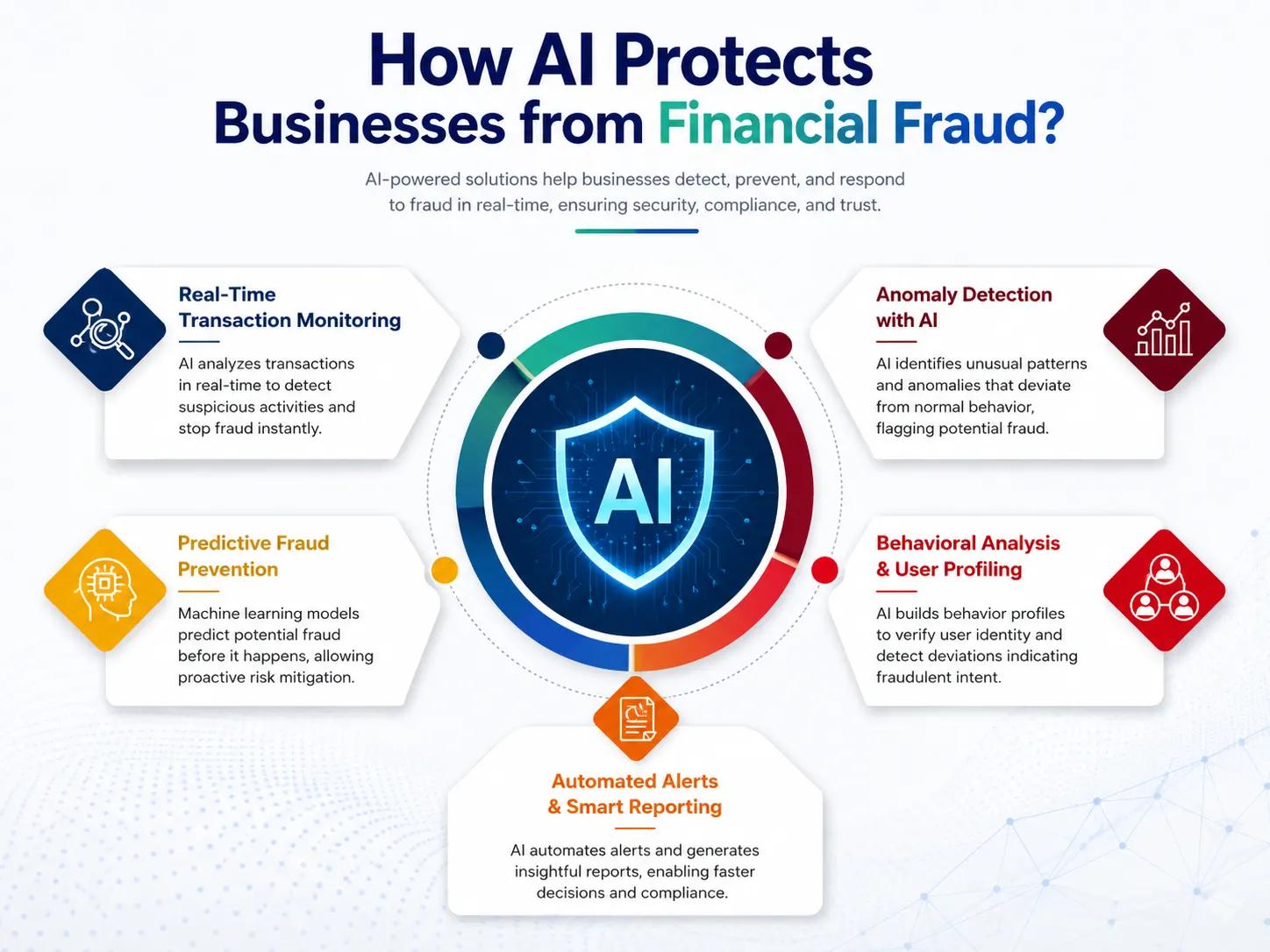
AI enables this by learning normal activity patterns across accounts, transactions, users, and devices. When behaviour deviates, the system can trigger alerts or reviews, making fraud prevention proactive rather than reactive. This allows businesses to address suspicious activity before losses occur.
How Fraud Detection AI Works
Fraud detection AI leverages machine learning, anomaly detection, and behavioural analysis to identify suspicious patterns. It compares current activity with historical trends to detect subtle deviations that may indicate risk.
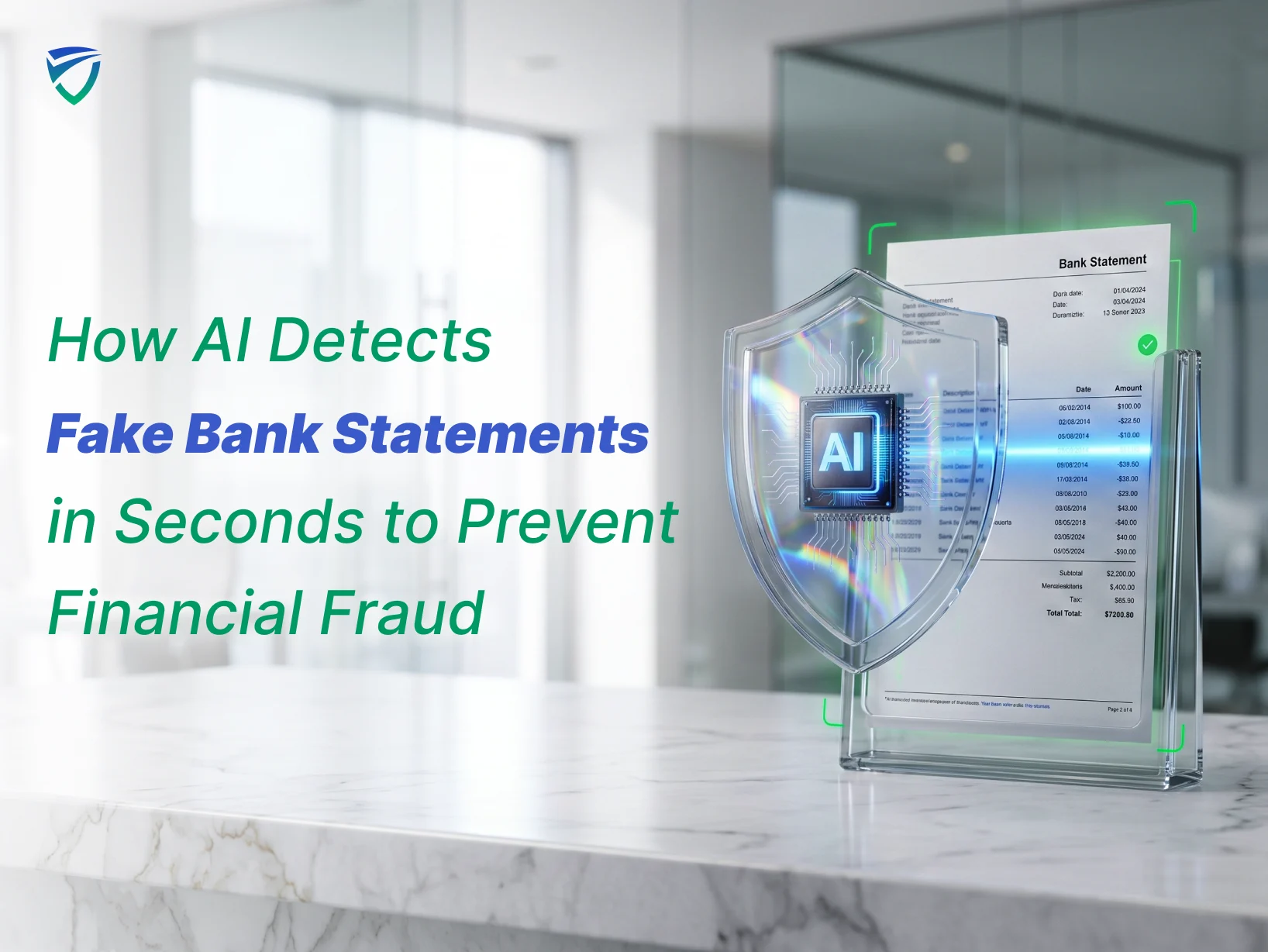
A trusted AI tool such as TrueShield.AI uses advanced technology to identify altered or fraudulent documents at the initial stage. When onboarding new customers or employees, it verifies documents, employment history, and other necessary information to establish trust.
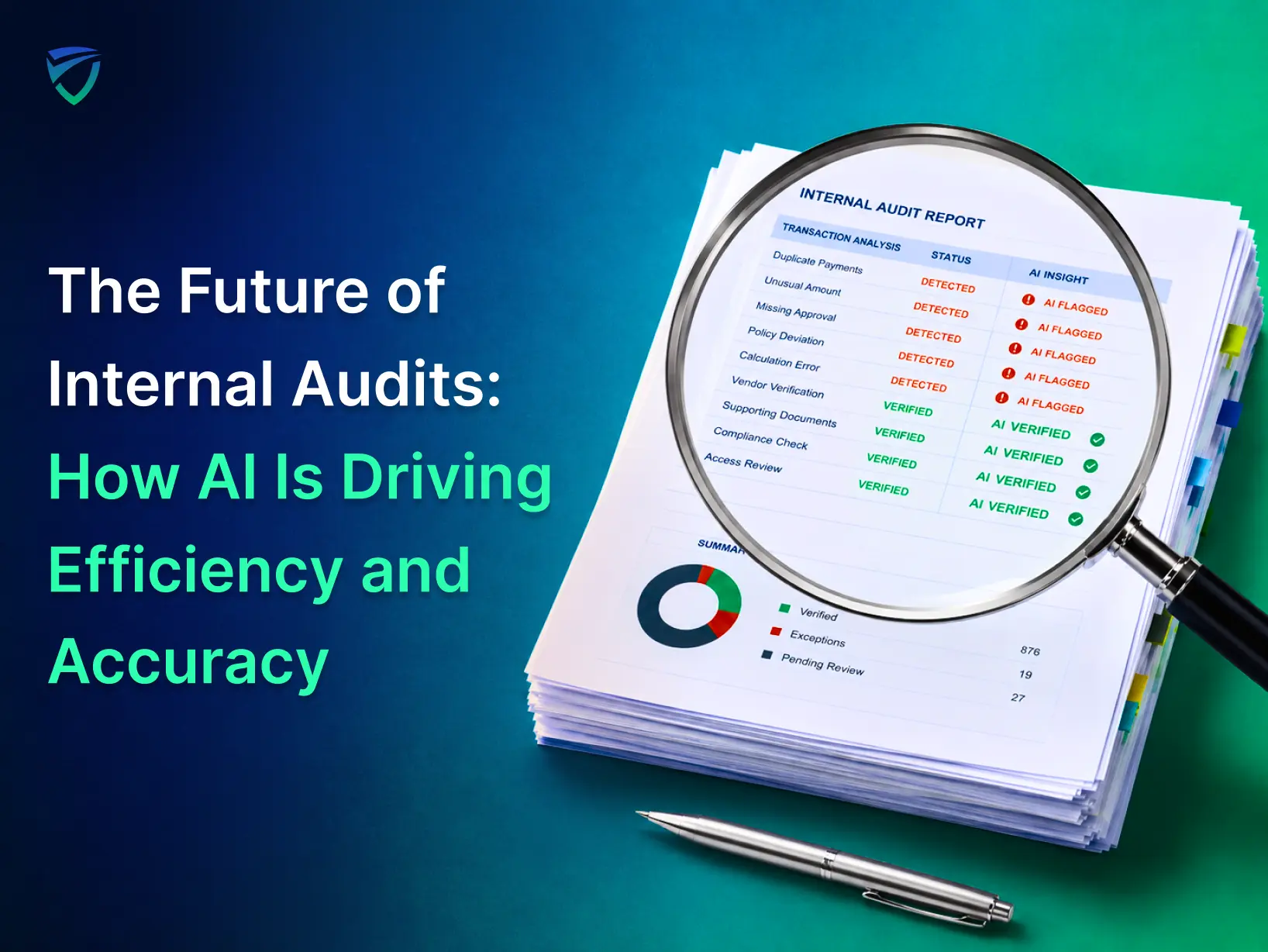
Unlike older systems that rely on a fixed list of rules, AI models improve over time. They learn from confirmed fraud cases, false positives, and user behaviour. This allows them to become more accurate and reduce unnecessary alerts. The result is faster investigation, lower operational burden, and better customer experience.
Speed is another key advantage. Fraud can occur within seconds, particularly in digital banking and online payments. AI systems analyse thousands of events instantly, enabling real-time responses when immediate action is essential.
The Role of Financial Behaviour Analysis
Financial behaviour analysis is a powerful tool in modern fraud prevention. It examines how customers interact with financial services, such as transaction size, frequency, timing, location, login habits, and spending patterns. When AI understands these baseline behaviours, it can more easily identify anomalies.
For example, if a business customer who typically makes domestic payments suddenly initiates repeated transfers to unfamiliar international accounts at night, AI can detect this pattern much sooner than a human analyst. Combining financial behaviour analysis with transaction monitoring provides businesses with a clearer risk assessment.
This approach also reduces false alarms. Not every unusual action is fraudulent; customers may travel, make large purchases, or change routines. AI distinguishes between harmless changes and significant red flags by evaluating multiple signals at once.
Why Trusted Data Matters
AI is only as good as the AI performance depends on the quality of its data. Incomplete, inaccurate, or poorly structured data limits even the best models. A Trusted Financial Data Extraction Tool is essential in the fraud detection process, providing structured, reliable information from statements, invoices, transaction records, and financial documents to enhance fraud analytics, enabling comparison of transactions, detection of anomalies, and linking suspicious activity across channels. It also supports better compliance and audit readiness. When financial records are extracted accurately and consistently, teams spend less time fixing data and more time identifying threats.
AI-Powered Financial Fraud Detection in Fintech
The growth of fintech is evident today. The industry is helping every sector of society. But they deal with new customers every day. In a large number. And one of the biggest reasons people choose fintech apps is that they are fast, efficient and reliable.
However, the rapid service fintech companies provide can expose them to significant risk if proper precautions are not taken. Without thorough background checks and document verification, admitting new customers or employees increases vulnerability. Fintech faces a high risk of fraud, making it a target for scammers.
An AI-powered tool such as TrueShield.AI enhances security for fintech companies and is trusted by many in the industry. From the initial registration stage, TrueShield.AI verifies every customer detail, including WhatsApp numbers and payslips. This comprehensive approach helps admit only genuine individuals and prevent fraud. AI-powered financial fraud detection in banking is the only way to move forward.
Conclusion
AI is transforming approaches to fraud prevention in business. Through real-time monitoring and financial behaviour analysis, intelligent systems enable organisations to detect threats earlier and respond more effectively. By leveraging fraud-detection AI and a Trusted Financial Data Extraction Tool, companies can establish stronger, more resilient financial security systems.
As digital banking grows, AI-powered financial fraud detection will become increasingly vital. Businesses that invest in these capabilities now will be better equipped to protect customers, reduce losses, and stay ahead of evolving fraud tactics.
Frequently Asked Questions
What is AI-powered financial fraud detection?
AI-powered financial fraud detection uses machine learning and behavioural analysis to spot suspicious activity in transactions, accounts, and documents faster than manual methods.
How does AI help prevent financial fraud?
AI helps prevent fraud by learning normal user behaviour, detecting anomalies in real time, and flagging unusual activity before losses grow.
Why is financial behaviour analysis important in fraud detection?
Financial behaviour analysis helps AI understand normal patterns like transaction frequency, location, and spending habits, making it easier to identify suspicious deviations.
Why is trusted data extraction important for fraud prevention?
Accurate data extraction provides AI with reliable information to analyse, improving fraud detection, reducing false positives, and supporting compliance and audit readiness.