Why Your Current Verification Process is Costing You More?
The digital revolution has expedited verification processes and, in many cases, reduced costs. In contrast, manual work demands more time, a larger workforce, additional equipment, and extra space to store physical paperwork. This practice can jeopardise accuracy, increase costs, and create avoidable security risks.
Digital alternatives are highly reliable, but it is natural to question their capability, trustworthiness, and security. Speed should never come at the expense of safety. Therefore, the right verification model is the one that delivers robust security in record time.
In this blog, we explore the visible and invisible costs of manual verification and how you can save time, money, and energy with digital alternatives to protect your business from fraud.
Why does the Verification Process Cost More?
Manual verification is expensive. The most obvious cost is your staff. You need people whose only job is to check and verify documents, something that can now be done faster and cheaper with technology. Storing physical files and documents also takes up space and adds extra costs for your company.
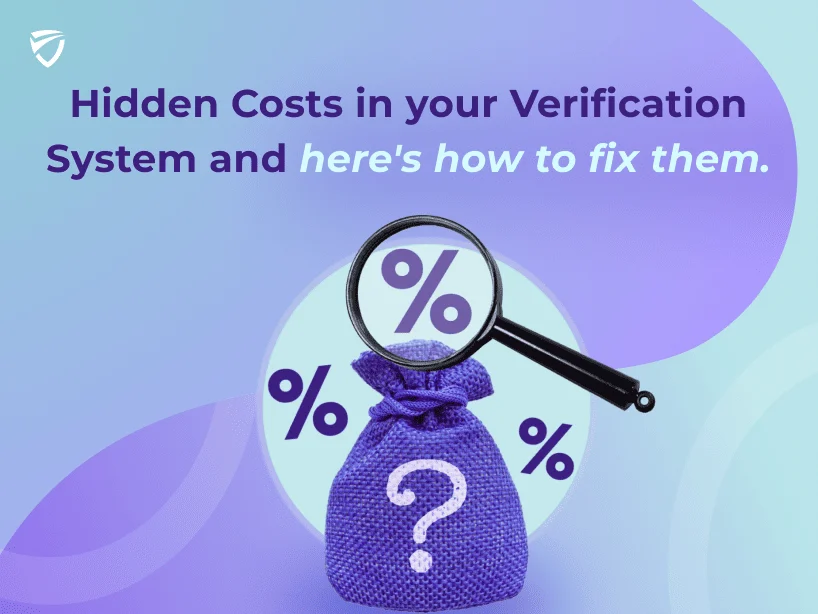
Beyond the identity verification fees, hidden expenses accumulate over time, mistakes by tired employees, the cost of retraining new staff, and the risk of missing fraudulent documents. Even one serious compliance mistake can lead to heavy penalties, often much higher than the cost of setting up a good automated system. That's why background screening costs can be misleading, they seem under control until something goes wrong.
What Automation Actually Changes
The financial KYC automation benefits are clear. Manual ID verification costs much more per customer than automated systems. Some industry reports suggest it can be five to ten times more expensive once you include staff salaries, fixing human errors, and the delays caused by slower onboarding.
Automated verification savings are visible to the company. You need fewer staff hours, customers are onboarded faster, decisions are more consistent, and fraud rates drop sharply. AI-powered tools apply the same strict checks at two in the morning as they do at nine, something no human team can realistically match.
Scalability is another big advantage. As your customer base grows, manual processes force you to keep hiring more. Automated systems don't. Your identity verification cost per customer goes down as your volume goes up, the exact opposite of what happens with manual verification.
The Cost of Getting It Wrong
In the end, the cost of your verification process is really about risk, not just operations. If fake or stolen identities get through a weak process, it results in chargebacks, regulatory fines, and serious damage to your brand. For fintech companies, especially, even one major compliance failure can have long-term consequences.
Manual checks are also easier for fraudsters to beat. Advanced document forgeries, synthetic identities, and even deepfakes are hard for humans to spot reliably, especially when they are tired or under pressure. A well-trained AI system is much better at catching these patterns at scale.
What TrueShield.AI Delivers
TrueShield.AI is designed for businesses that cannot afford mistakes in verification. Our platform uses AI to verify documents and live images in real time, offering speed and accuracy that manual checks simply cannot match, at a cost that healthily scales with your business, rather than working against you.
This means fewer fake identities getting through, faster onboarding for genuine customers, and a complete, audit-ready record that satisfies regulators without adding extra manual work for your team.
Conclusion
The real cost of your verification process is more than just what you see in your budget. It includes growing risks, missed fraud, and customers who leave because onboarding takes too long. Companies that move to automated verification save money and catch more fraud, building a safer, more scalable foundation for growth.