How Advanced Bank Statement Analyzers Help Detect Fraud?
Introduction
A bank statement used to be simple proof: upload it, and a lender would take your income and spending history at face value. That trust is what today's fraud exploits. Editing tools make it easy to inflate a salary credit, smooth over an overdraft, or manufacture a spotless transaction history, and a document that looks clean can pass through manual review.
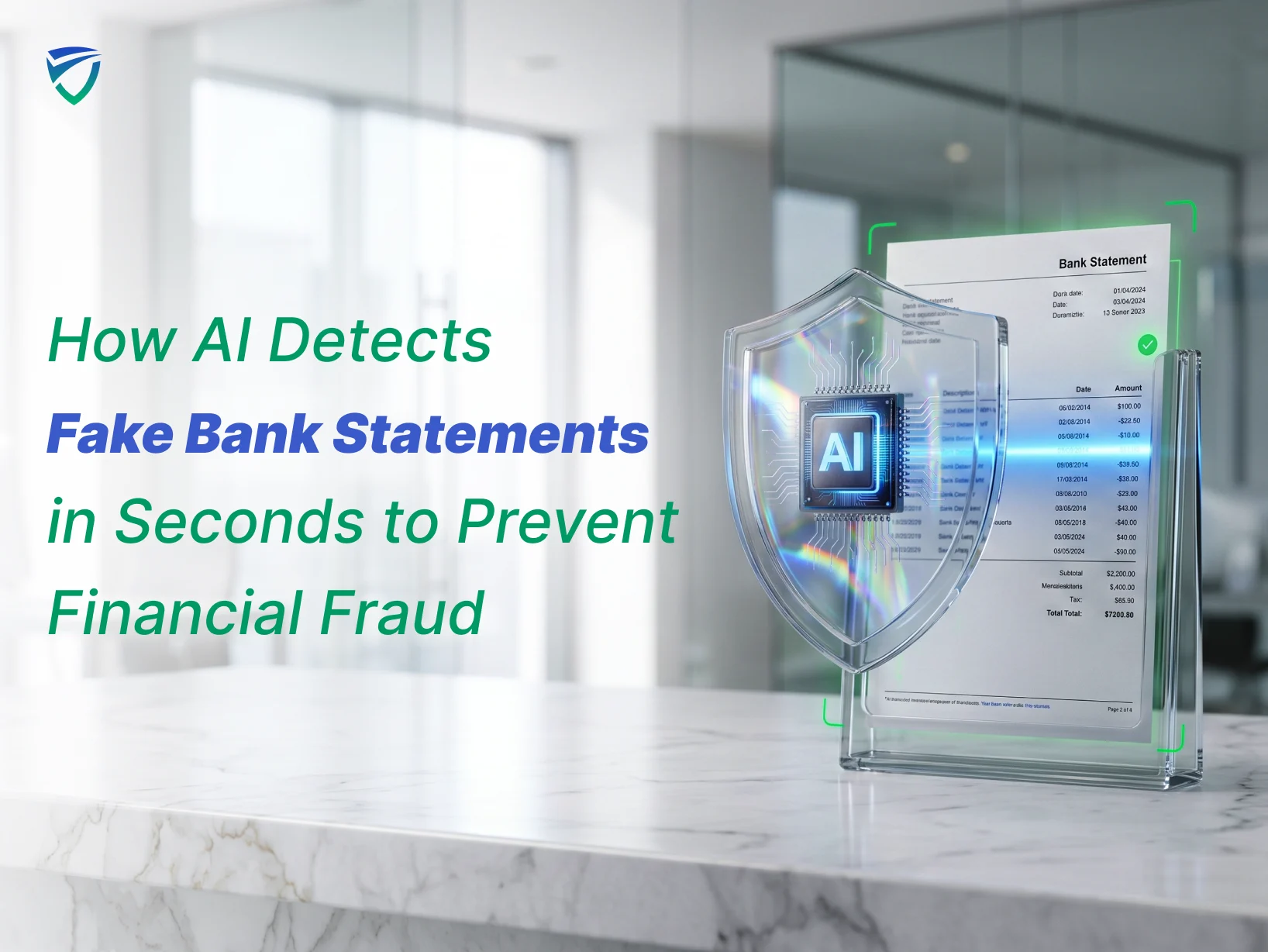
This is the gap an Advanced Bank Statement Analyzer is built to close. Instead of a human skimming pages of transactions, an AI-driven fraud detection tool reads every line of a statement in seconds, checks it against what a genuine document from that bank should look like, and flags exactly where something doesn't add up. For NBFCs, banks, and fintech lenders processing hundreds of applications daily, this shift from eyeballing PDFs to structured AI bank analysis is becoming the difference between catching fraud early and discovering it after the loan is disbursed.
Learn in detail how it works.
What Makes an Advanced Bank Statement Analyzer Different
A basic statement reader does one job: it pulls numbers off a page. An advanced one goes several steps further by combining extraction with verification, which is where the real fraud detection happens.
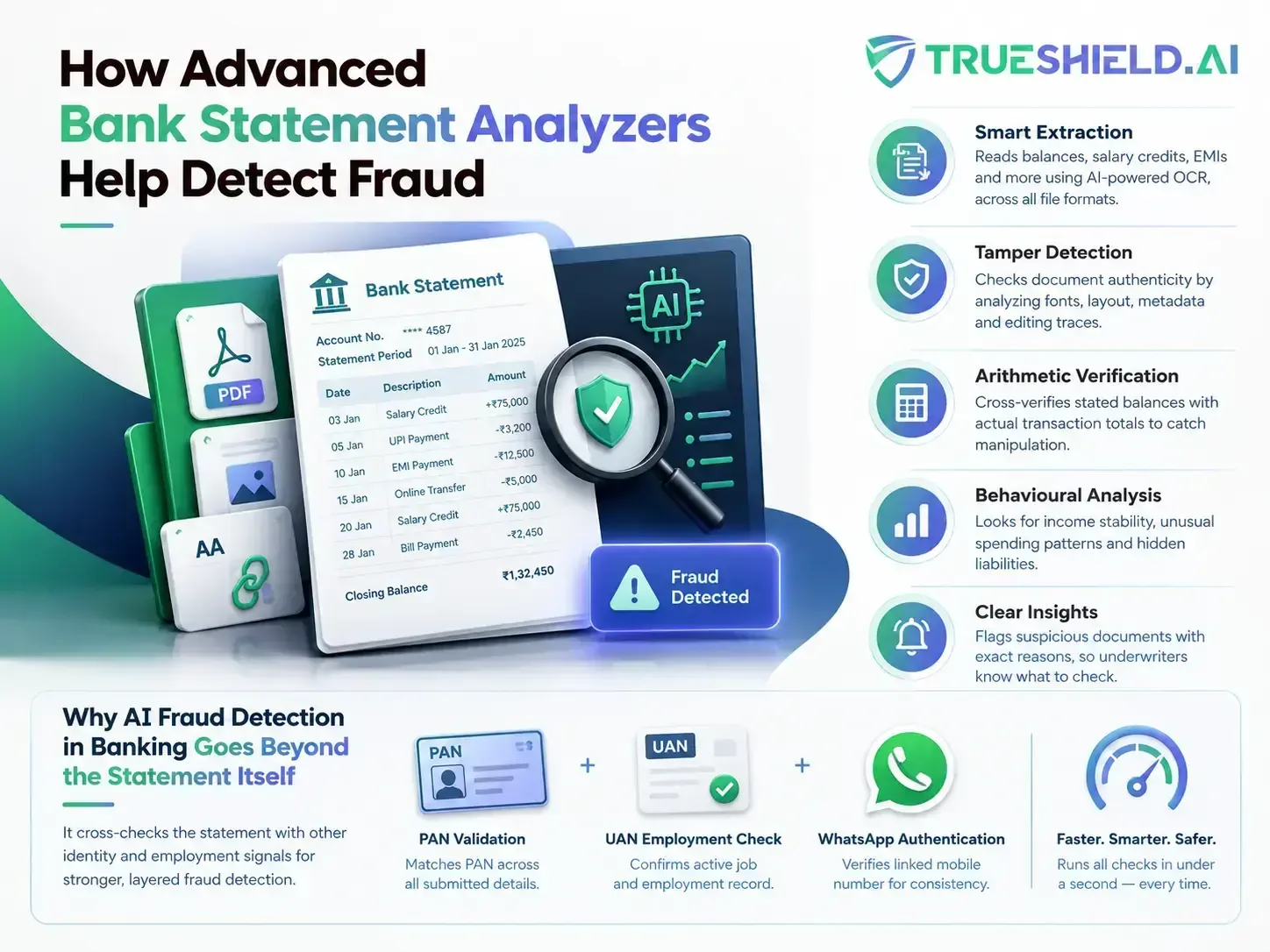
It reads the document the way an expert would. Using AI-powered OCR trained on dozens of bank formats, it extracts balances, salary credits, EMIs, account identifiers, and addresses, regardless of whether the file is a clean digital PDF, a scanned image, or an Account Aggregator format. This matters because fraud often hides in formatting inconsistencies that a generic OCR tool would simply miss. It checks whether the document is genuine.
This is the core of advanced fraud detection using bank statement AI: comparing font consistency, layout geometry, metadata, and editing-tool signatures against known genuine templates for that bank. A statement opened in a PDF editor and altered leaves traces - different font rendering, altered spacing, metadata that doesn't match the claimed source - even if it looks flawless on screen. The system also cross-verifies stated balances against actual computed transaction totals, so a manually inflated closing balance is caught by simple arithmetic rather than just pattern matching.
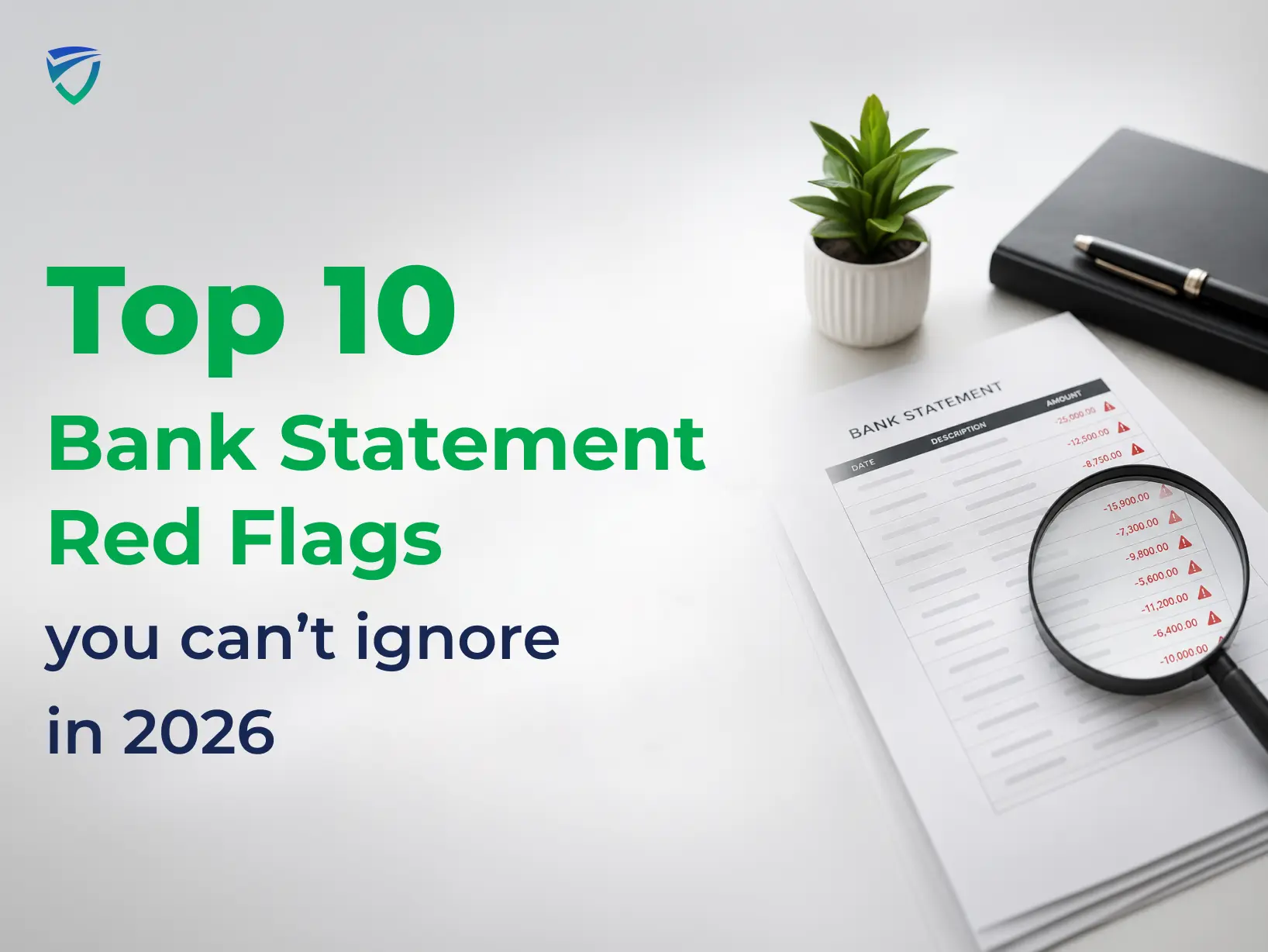
It looks at behaviour, not just numbers. Beyond tampering, the analyzer examines income stability, spending patterns, and cash flow trends across the statement, flagging fabricated income, irregular transaction clusters, or undisclosed liabilities that wouldn't be obvious at a glance.
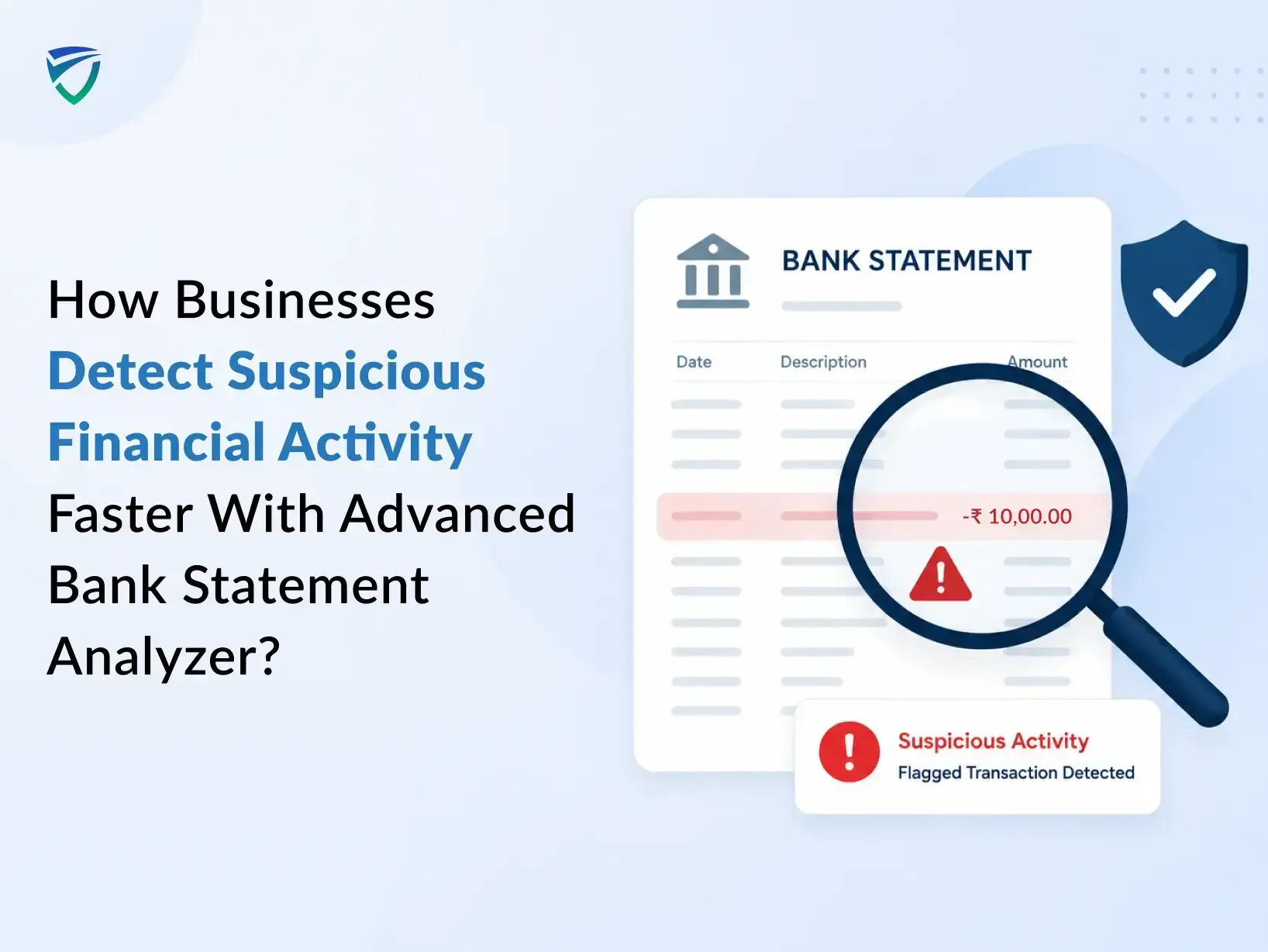
The result isn't a vague risk score. Suspicious documents are flagged with the specific reason behind the flag, so an underwriter knows exactly what to investigate rather than second-guessing a black-box number.
Why AI Fraud Detection in Banking Goes Beyond the Statement Itself
A bank statement rarely lies in isolation; fraud usually shows up as a mismatch between what's on the statement and everything else the applicant has submitted. This is why a genuinely useful fraud detection tool doesn't stop at the PDF - it cross-checks the statement against other identity and employment signals in the same flow.
An advanced analyzer typically runs this alongside PAN validation, UAN-based employment checks, and WhatsApp number authentication, so a statement claiming a steady salary can be tested against whether the applicant's employment record (via their UAN) shows an active job, or whether the PAN on the statement matches the one submitted elsewhere in the application. When these signals line up, a lender can approve with confidence. When they don't, that mismatch becomes the fraud signal - often stronger than anything found in the statement alone.
This layered approach matters because document fraud continues to evolve. A well-edited fake statement can fool a human reviewer; it's far harder to fake a statement, a PAN, an active EPFO record, and a linked mobile number all at once, consistently, across a fast automated check. That's the practical value of AI fraud detection in banking that teams increasingly rely on: not one clever trick, but several independent checks that a fraudster would all need to defeat simultaneously.
There's also a speed dimension that's easy to underestimate. Manual review of a six-page statement can consume a significant part of an underwriter's day. That time cost discourages thorough checking at scale, because reviewers cut corners when volume is high. An AI-driven analyzer runs the same depth of checks in under a second every time, regardless of application volume. That consistency is a fraud-prevention feature in its own right: it removes the human tendency to approve statements that "look fine" under time pressure.
Conclusion
Bank statement fraud has moved past the crude edits a reviewer could spot at a glance; today's fakes are engineered to survive quick manual review. Catching them now requires the same level of sophistication on the defense side: structured extraction, tamper detection based on genuine document templates, arithmetic cross-checks, and identity signals from outside the statement.
This is exactly what an Advanced Bank Statement Analyzer delivers: turning a single uploaded PDF into a fast, evidence-backed answer rather than a guess. For lenders and fintechs that can't trust a document just because it looks polished, that combination of AI bank analysis and cross-verified fraud detection is no longer a nice-to-have; it's becoming the baseline for responsible lending.
TrueShield.AI brings this into a single platform: bank statement analysis, tamper detection, and identity and employment cross-checks, all running in under a second per document. If your team is still relying on manual review to catch what a well-made fake can slip past, it may be worth seeing what an automated check actually finds.
Frequently Asked Questions
How do banking systems detect fraud?
Fraud detection in banking uses real-time analytics, machine learning, and behavioural tracking to detect and block unauthorized transactions or account access.
Do banks use AI to detect fraud?
Yes, banks use artificial intelligence and machine learning models to detect and block fraudulent transactions in real time. These systems evaluate thousands of data points, such as location, device details, and spending habits, in milliseconds to spot unusual behavior that older, rule-based systems often miss.
What is the most common way to detect fraud?
The most common way to detect fraud depends on the context. For organizations and businesses, tips and whistleblowers catch the highest percentage of internal fraud, while digital payments and banking rely primarily on automated transaction monitoring and machine learning.
Which type of fraud is the most common?
According to data from the Federal Trade Commission (FTC), imposter scams are the most common type of consumer fraud. In these scams, criminals impersonate a trusted organisation, government official, business, or family member to trick you into sending money or sharing private details.