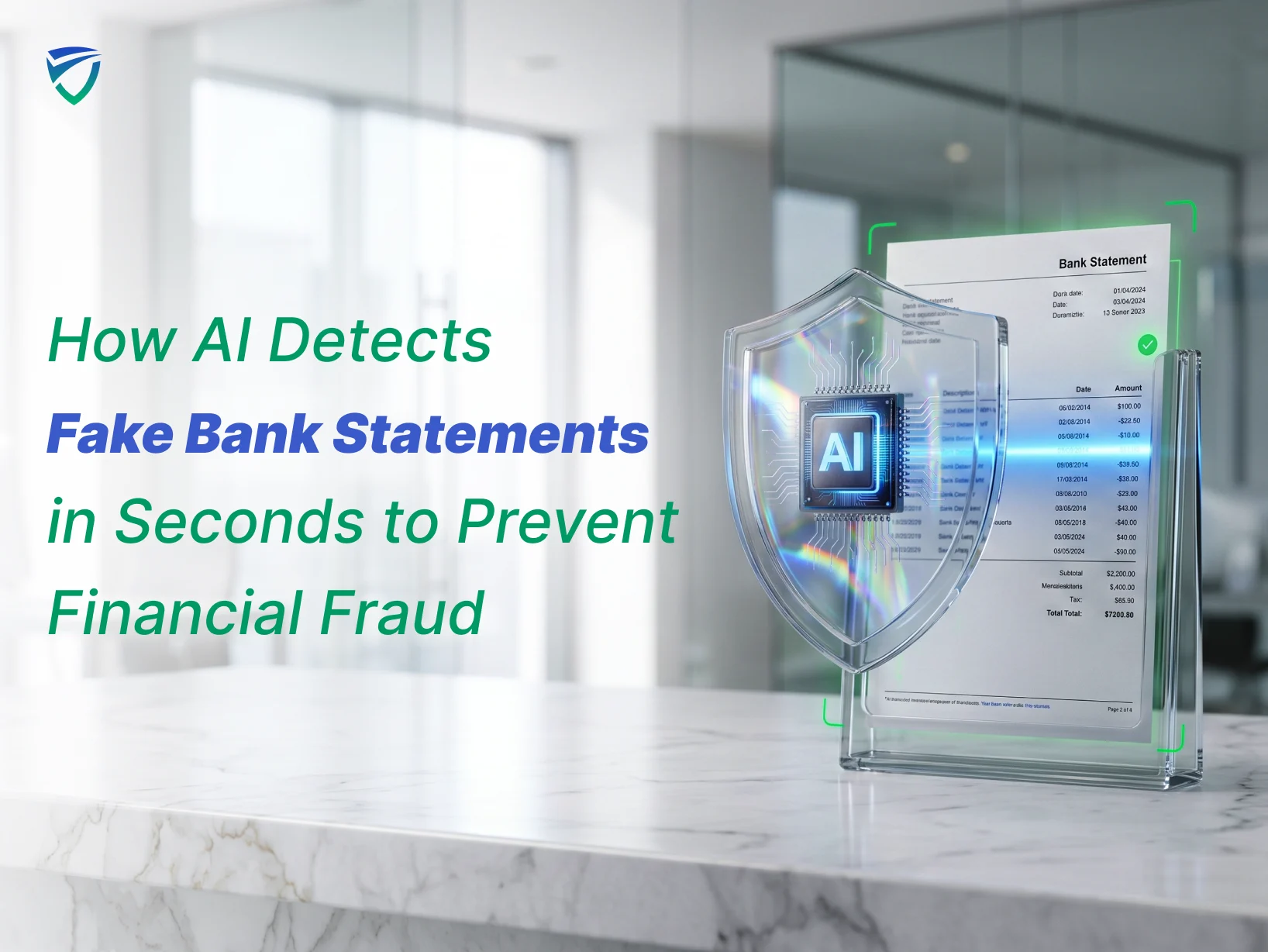
How AI Detects Fake Bank Statements in Seconds
Introduction
Onboarding a new employee is interesting, but it requires more verification than ever. Usually, the employer verifies salary slips and bank statements to check the employee's previous salary and past employement. But what if the new joinee increases one zero in their previous salary? What if they remove one entry or add a fake entry? The possibilities are low but not zero. And even if there may be only 3 or 4 cases in an entire organisation, it can cost way more than you think.
This example is just about an employee cheating with their organisation. What if a client does it? What if a partner does it? Having a fake document enter your company is way scarier than we think, so how do we prevent it? With the use of AI. Let us understand this in detail.
The Role of AI in an Organisation
The evolution of AI is making it useful in every industry. One of the most useful aspects AI has brought to the table is automating document verification. For any company these days, documents are crucial. And editing them is becoming simpler. Even common people can make a few basic changes and change the whole thing with a few clicks. But these few clicks can change a lot of things for a company.
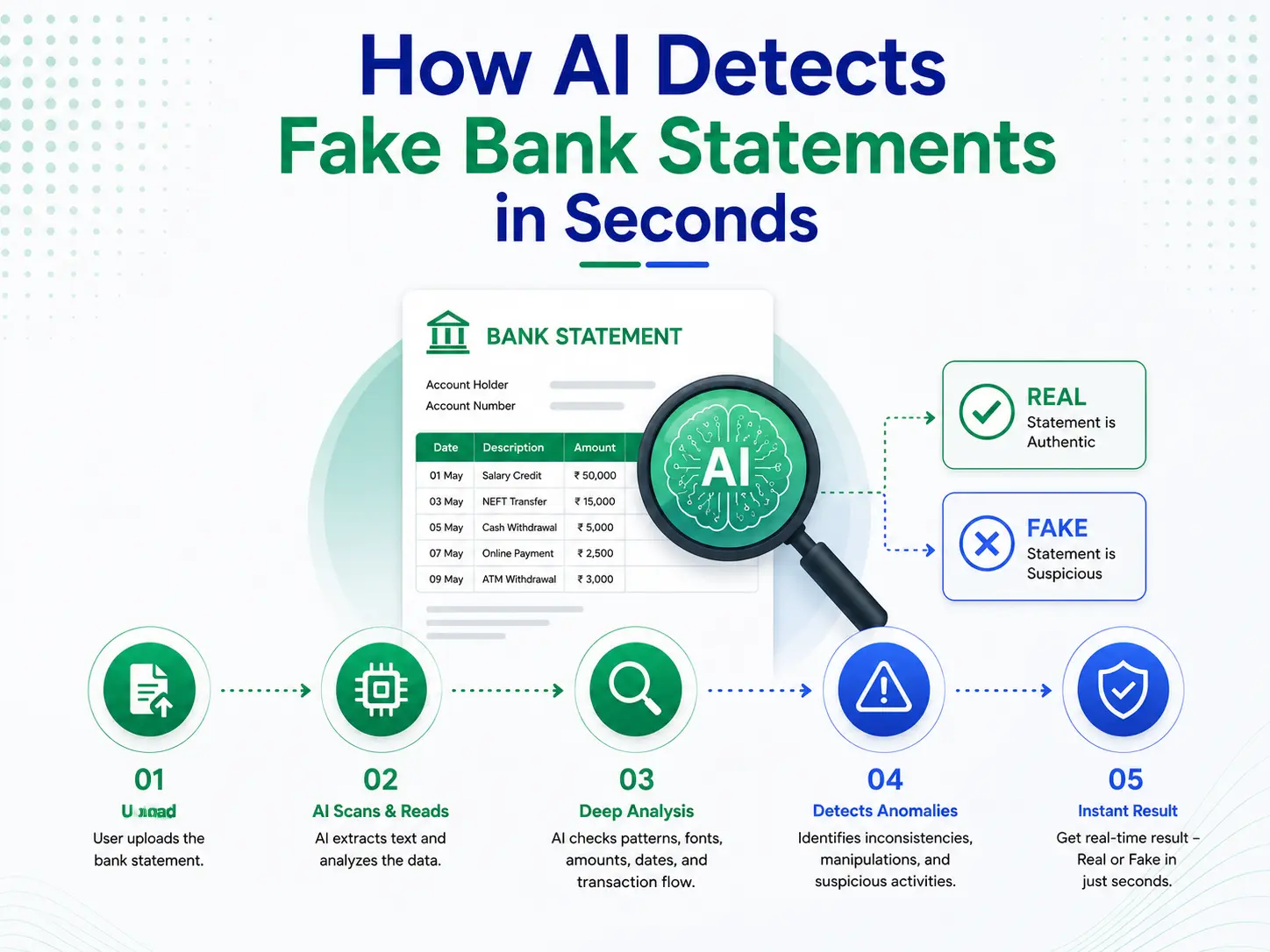
Imagine verifying every document manually. It requires a team and a lot of valuable time. For fintech companies, manual verification can cost them customers. One of AI's key strengths is reducing this burden by using OCR to read statements, extract key fields, and compare them against expected patterns. This makes bank statement verification faster and more accurate, especially when large volumes of documents need to be checked every day.
AI also improves fraud detection by spotting inconsistencies that may not be visible to the human eye. For example, it can detect changes in fonts, spacing, transaction order, balance patterns, or duplicate entries. These small signs help identify tampered records before they create problems for the business. With bank statement extraction AI, organisations can process documents in seconds and flag suspicious files for review instead of spending hours on each case.
How AI Detects Fake Bank Statements in Seconds
AI compares the structure and content of a document with thousands of legitimate examples. If a statement has unusual formatting, mismatched transaction values, edited text, or inconsistent metadata, the system can flag it immediately. This is especially helpful in AI bank statement verification in India, where companies handle a high volume of documents from different banks and need quick decisions without sacrificing accuracy.
TrueShield.AI is a powerful AI tool that can detect edited or fake documents in seconds. It recognises patterns in bank statements, PAN cards, Aadhaar cards, salary slips, and many other documents, so it can identify even minor changes in writing patterns or edits. It is one of the most trusted by corporate companies and the fintech industry.
Conclusion
AI has become an essential part of modern organisations because it saves time, improves accuracy, and strengthens trust. In document-heavy processes, it helps companies verify information quickly and identify fraud before it causes damage. From OCR document scanning to AI-powered bank statement extraction, the technology is changing how businesses handle verification. For organisations that want speed, safety, and smarter workflows, AI is no longer optional; it is a necessity.
Safeguards need to be strong enough to protect your company. An organisation deals with multiple documents at once; only let the genuine ones enter the company. Stay ahead of fraudsters; visit TrueShield.AI and book a demo today.
Frequently Asked Questions
How does AI actually spot a fake bank statement?
AI cross-checks the document's metadata, formatting, and font consistency against known bank templates, while also scanning for tampered transaction entries, mismatched balances, and edited PDF layers, flags a human reviewer would likely miss in a manual glance.
Can't fraudsters just use better editing tools to beat the AI?
Editing software can fix the visible layer, but it rarely fixes what's underneath: metadata trails, compression artefacts, and structural inconsistencies in the file itself. AI models are trained to catch exactly these invisible seams.
Is this different from just checking a PDF's properties manually?
Yes. Manual checks catch obvious red flags. AI runs pattern recognition across thousands of verified statements to detect subtle anomalies, like a transaction history that's statistically inconsistent with real account behaviour, in seconds instead of hours.
Does AI verification replace human underwriters?
No, it filters the noise so underwriters spend their time on genuinely borderline cases instead of manually eyeballing every document that comes in.