How AI Helps Detect Insurance Claim Fraud
Introduction
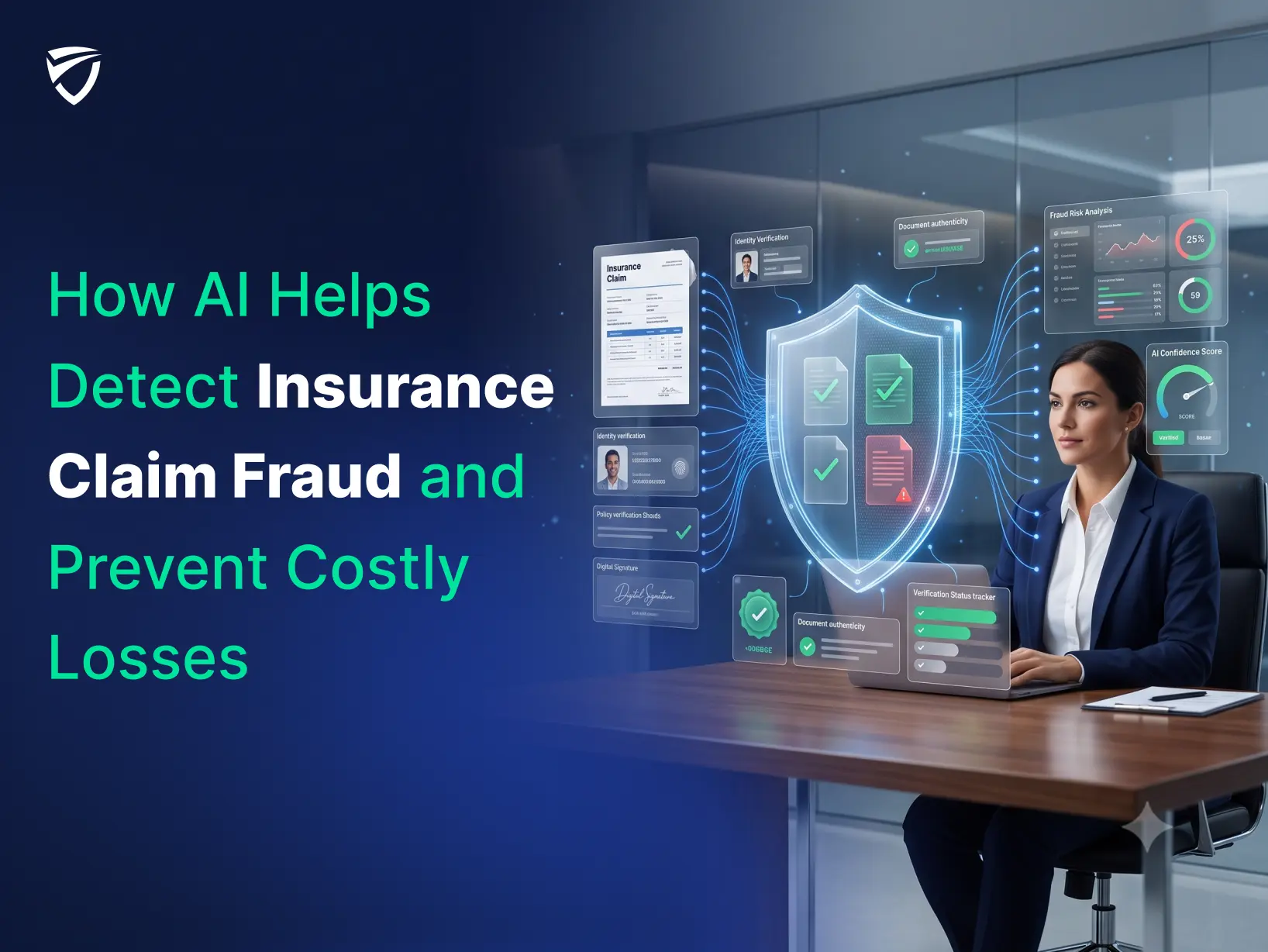
Fraud affects many industries, including banking, lending, retail, healthcare, and insurance. As digital processes grow, fraudsters develop new ways to manipulate documents, identities, and claims. Businesses need robust systems to detect suspicious activity early and minimise losses while maintaining a positive customer experience. In this environment, AI fraud detection is increasingly essential.
Detecting insurance fraud is challenging due to complex claims involving multiple documents, human judgment, and time-sensitive decisions. Manual reviews can miss subtle indicators, especially when fraud appears routine. Machine learning and advanced analytics help insurers improve detection, speed up reviews, and strengthen claim security. This article explains how AI insurance fraud detection works, its role in claim processing, and how businesses in India can use it to counter evolving fraud tactics.
How Machine Learning Detects Insurance Fraud
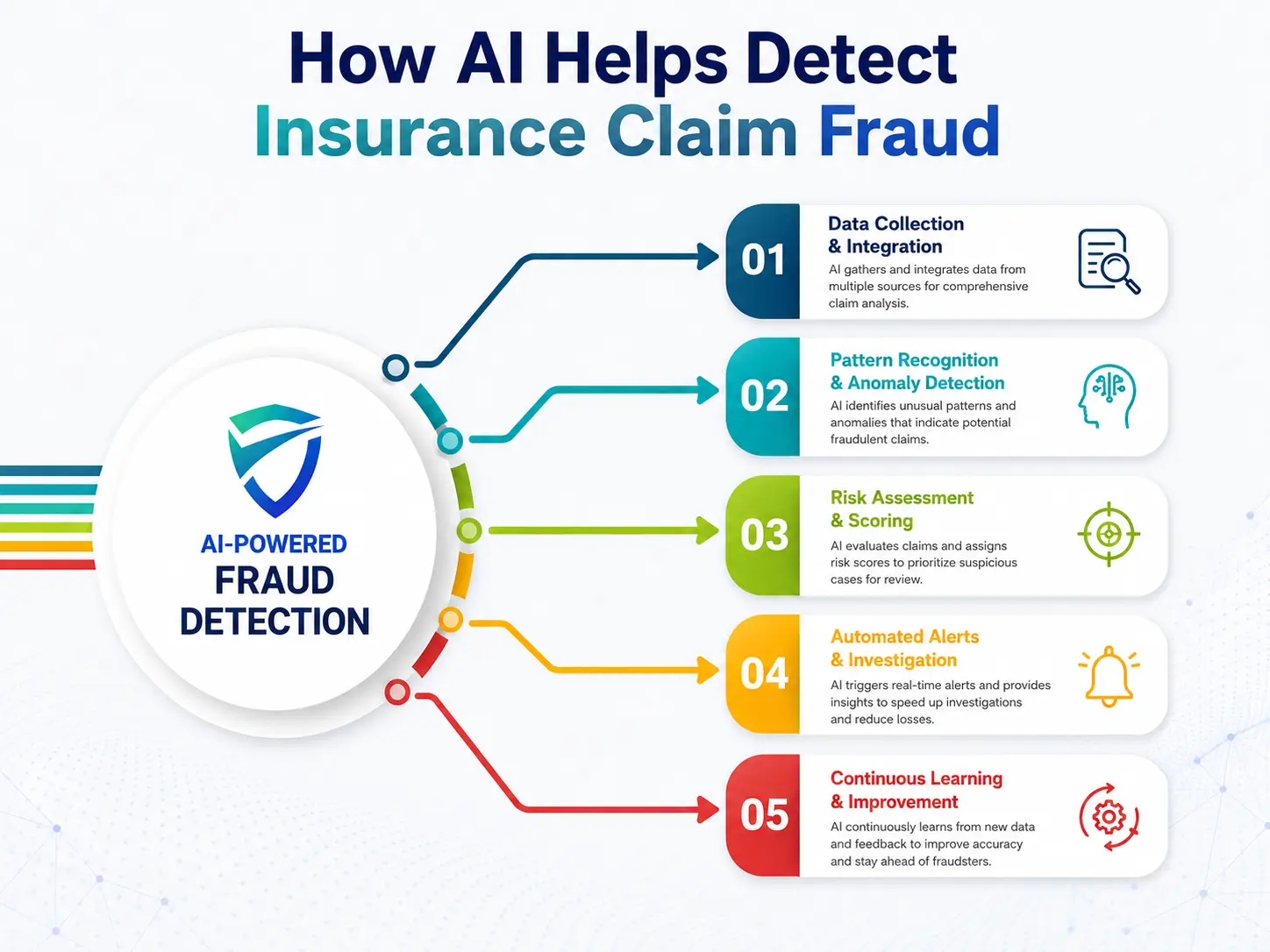
Machine learning detects insurance fraud by analysing patterns in past claims to distinguish normal from suspicious activity. Rather than relying solely on fixed rules, it processes large datasets to identify unusual combinations that humans might miss. For example, it can flag repeated claim amounts, inconsistent accident descriptions, unusual timing, duplicate documents, or claims matching known fraud patterns.
Machine learning improves over time as it processes more claims and learns from new examples, enhancing its ability to recognise risky behaviour. Insurers can use AI fraud detection to rank claims by risk, refer high-risk cases for further review, and expedite low-risk claims. This approach increases both efficiency and accuracy.
AI also helps in document verification. In many fraud cases, people alter invoices, medical reports, repair estimates, or identity documents. Machine learning models can compare document details across records, identify mismatches, and detect signs of manipulation. In insurance claim processing, this can save time, reduce manual work, and prevent fraud before payment is released.
Machine learning can analyse multiple signals at once. A claim may appear normal, but when combined with prior claims, customer history, location data, and behavioural patterns, it may indicate higher risk. This layered analysis makes AI insurance fraud detection more effective than traditional rule-based systems.
AI insurance fraud detection in India and its business impact
The need for AI-based insurance fraud detection in India is growing rapidly as the insurance market expands and digital submissions become more common. More online claims mean more convenience for customers, but also more opportunities for fraud. Insurers in India face challenges such as forged documents, inflated repair bills, staged accidents, false health claims, and identity manipulation. Manual checks alone are not enough to manage this scale.
AI enables insurers in India to build more responsive fraud management processes. By applying machine learning models tailored to local claim patterns, insurers can detect suspicious activity more quickly and consistently. This is especially valuable in motor, health, and travel insurance, where high claim volumes make manual detection difficult.
TrueShield.AI uses AI-powered pattern recognition to detect fake or altered documents. It verifies all documents entering your organisation and protects companies of any size, from fintechs to multinational corporations and start-ups. As data fraud and document scams become more common, businesses must safeguard against fraudulent documents to prevent significant losses. It is more complex, so are the tools to combat it. AI fraud detection provides insurers with smarter methods to identify suspicious activity, enhance claim processing, and protect both businesses and customers. Machine learning helps insurers uncover hidden patterns in large data sets, verify documents more effectively, and prioritise high-risk cases with greater accuracy.
Conclusion
In rapidly growing digital insurance markets like India, AI insurance fraud detection is becoming a competitive necessity rather than a future possibility. Organisations that adopt these systems early can reduce losses, improve efficiency, and build greater trust in the claims process. As fraud tactics evolve, insurers who combine technology with human judgment will be best positioned to stay ahead.
TrueShield.AI offers comprehensive services to help you stay protected and ahead of fraudsters. Manage all verifications with a single tool. Visit the website to learn more and book a demo.
Frequently Asked Questions
How does AI help in fraud detection?
AI recognises patterns. It uses previous data and the information fed to it. It analyses numerous documents and scams to identify patterns. When it scans the document, it checks every aspect and detects any fraud.
Do banks use AI to detect fraud?
Yes, banks are actively using AI tools to detect fraud and stay ahead of scammers.
What are the 4 P's of fraud?
Pretend, Problem, Pressure, and Pay. These four are the framework used by consumer protection agencies to identify common scam tactics.
Do insurance agents use AI?
Yes, many of them started using AI to verify documents, background checks of the customer and the truthfulness of the involved parties.