How Do Fintech Companies Use UAN Verification APIs?
Every digital lending platform faces the same underwriting problem: an applicant's claimed income is only as trustworthy as the document behind it, and documents can be edited, forged, or borrowed. Employment data from the Employees' Provident Fund Organization (EPFO) has become one of the most valuable signals in Indian fintech underwriting. EPFO maintains employment records for more than 270 million registered employees through the Universal Account Number (UAN) system. Because employers, not applicants, submit this data directly, it is harder to manipulate than a payslip or offer letter. For fintech companies building trust at scale, the UAN Verification API has become foundational infrastructure rather than an optional add-on.
What a UAN Verification API Actually Does
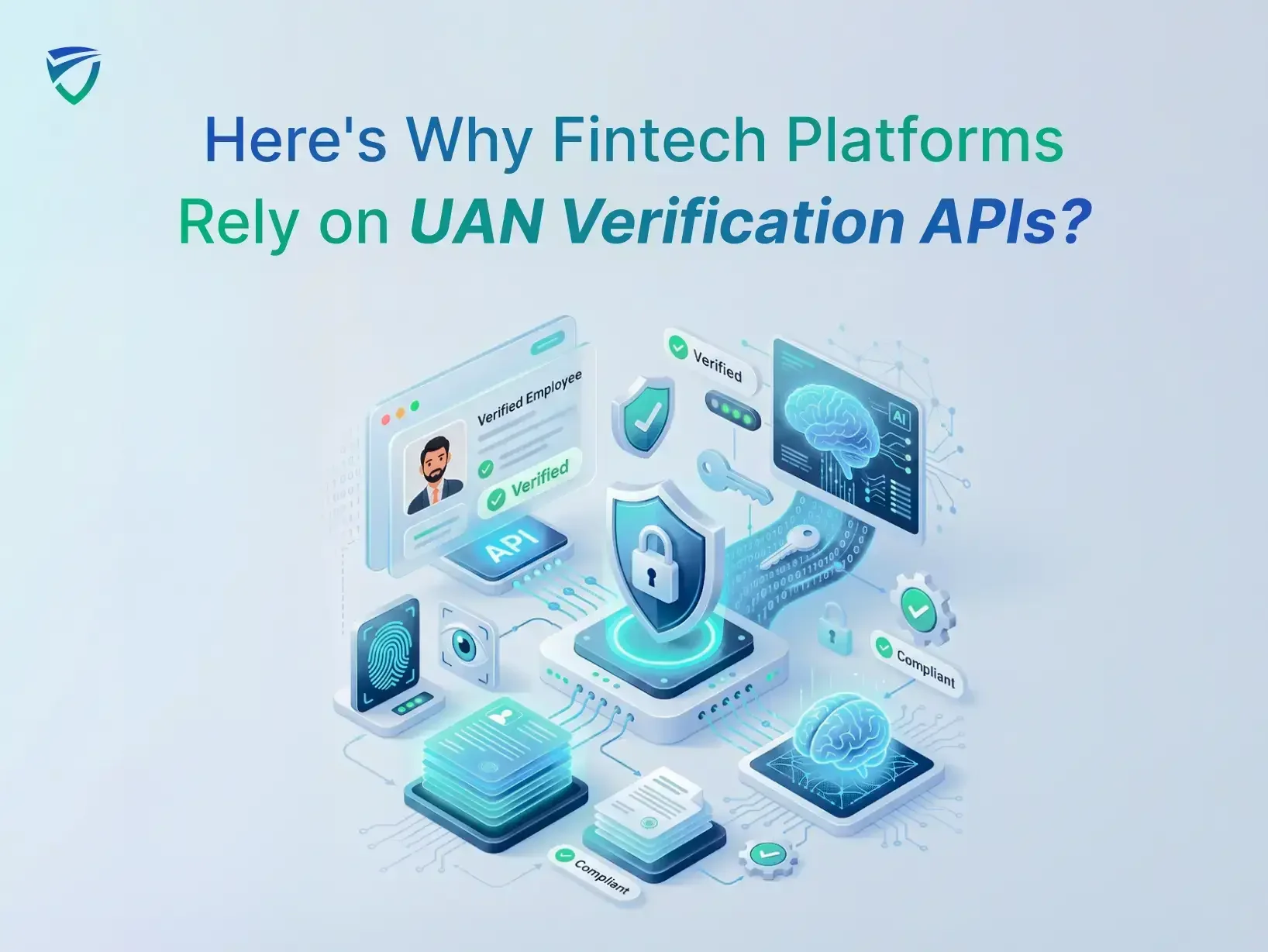
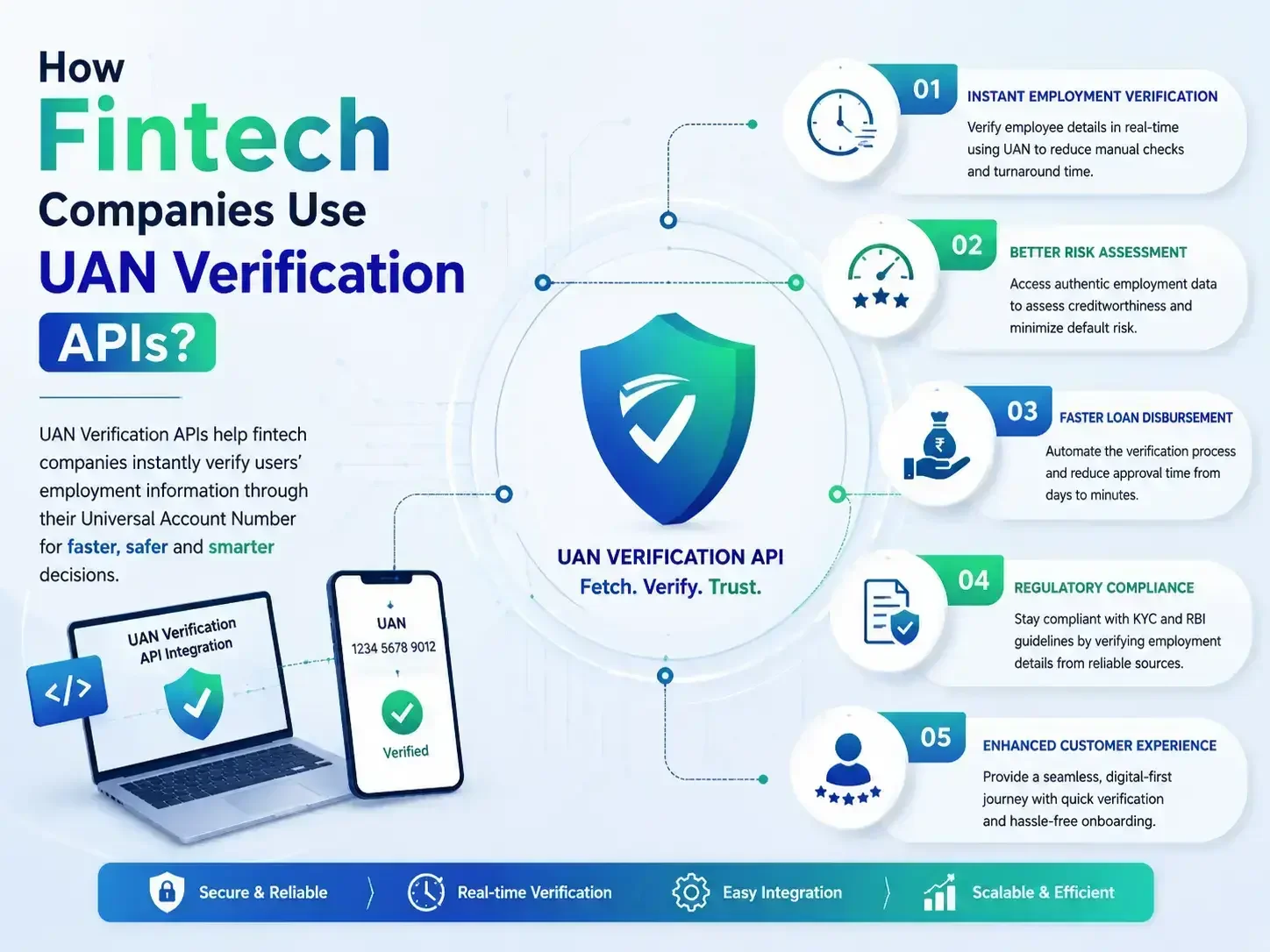
A UAN Verification API allows a lending platform to confirm in real time that a Universal Account Number(UAN) is valid, active, and genuinely linked to the applicant. With the borrower's consent, the API can also pull associated EPFO passbook data, including current and past employer names, contribution history, and tenure at each organization. Instead of a loan officer manually cross-checking a UAN on the EPFO portal or waiting days for HR verification calls, the check is completed in seconds through a single API. The use of employment verification sits at the center of two very different fintech priorities: underwriting accuracy and fraud prevention. A UAN check tells a lender not just whether someone is employed, but whether their income claims hold up against an independent, employer-reported source.
Why Fintechs Are Automating UAN Checks
Manual EPFO verification does not scale. Loan volumes at digital-first NBFCs and lending apps can reach thousands of applications per day. Manual cross-checking introduces delays, inconsistencies, and reviewer fatigue, allowing fraud to slip through. Automating the UAN check with a fintech API in India solves this at the infrastructure level. Verification becomes a standard, consistent step in the onboarding flow rather than a discretionary one, and it happens before disbursal decisions, not after.
TrueShield.AI integrates UAN verification directly into the fraud and identity layer of the lending journey. Instead of treating employment verification as an isolated compliance checkbox, the platform correlates UAN data with other identity and behavioral signals, device intelligence, digital identity checks, and application behavior to build a single, consistent risk picture for each applicant.
UAN Verification as Fraud Prevention
The fraud risk associated with UAN checks is often underestimated. Synthetic identities and income inflation are two common failure points in digital lending, both of which are directly addressed by cross-referencing a UAN against EPFO's system. If a UAN does not exist, does not match the applicant's declared identity, or shows a contribution history inconsistent with the claimed salary, that mismatch is a strong early fraud signal that surfaces before funds are disbursed rather than during collections.
This is where fraud prevention UAN checks earn their place in a modern risk stack. A steady, verifiable EPF contribution history is difficult to fabricate because it depends on an employer's independent submissions to a government body. For fraud teams, that independence is the point: it is a data source applicants cannot simply edit in their favor.
Conclusion
UAN API for digital lending platforms, speed and accuracy must coexist. Applicants expect decisions in minutes, not days, but speed cannot come at the cost of underwriting quality. A UAN API closes this gap by providing underwriting engines with a verified, real-time employment data point that integrates directly into automated decisioning, eliminating the need for a human reviewer to check every application manually.
TrueShield.AI's approach treats UAN verification as a single layer within a broader fraud detection architecture. It works alongside device and behavioral intelligence, so lending platforms do not rely on a single data point but on a corroborated, multi-signal view of applicant trustworthiness. For NBFCs and fintech lenders under RBI compliance, this layered approach also supports stronger audit trails and more defensible underwriting decisions.
As India's digital lending market scales, institutions that combine speed with verifiable trust, rather than choosing one over the other, will keep fraud losses down while maintaining fast approval times. UAN verification, built into the fraud and underwriting stack from day one, is a core part of striking that balance.
Frequently Asked Questions
What data does a UAN Verification API typically return?
Beyond confirming that a UAN is valid and active, the API can return EPFO passbook details, such as current and past employer names, tenure at each employer, and monthly contribution history, providing lenders with a verified view of employment and income stability.
How does UAN verification help prevent loan fraud specifically?
Because employers submit EPF contributions rather than applicants, UAN data is difficult to fabricate. A mismatch between declared income and actual contribution history, or a UAN that doesn't correspond to the applicant's identity, is a reliable early indicator of synthetic identity or income fraud.
Can UAN verification be used for applicants who are self-employed or not EPFO-registered?
No, UAN verification only applies to salaried applicants with an active EPFO account. Lenders typically combine it with alternative verification methods, such as bank statement analysis, for self-employed or informally employed applicants.
Is UAN data verification compliant with India's data protection requirements?
Yes, when implemented correctly. UAN checks require explicit applicant consent before data is pulled from EPFO, and the process should align with the Digital Personal Data Protection (DPDP) Act's consent and data-minimization principles, alongside encrypted data handling throughout the verification flow.