How does the EPF UAN Authentication API Work for New Users?
In today's digital world, speed and security go hand in hand. Whether it's a fintech platform approving a loan, an employer verifying a new hire, or a business running KYC checks, identity verification now sits at the heart of almost every workflow.
At the same time, fraud is getting smarter. We're seeing more:
- Fake employment claims,
- Tampered salary slips,
- Edited PDFs,
- And manipulated identity information.
Traditional manual verification methods simply can't keep up. They're slow, inconsistent, and often leave room for human error.
That's where the EPF UAN Authentication API comes in.
For new users in particular, understanding how this API works can help businesses simplify onboarding, cut down fraud risk, and build trust from day one.
What is EPF UAN Authentication?
The Employees' Provident Fund Organisation (EPFO) assigns every salaried employee in India a unique Universal Account Number (UAN). Think of it as a permanent ID that stays with the employee across jobs and employers, linking all their provident fund records in one place.
An EPF UAN Authentication API allows businesses to verify digitally if
- A UAN is valid
- It exists in the EPFO records
- It belongs to an active employee profile.
Instead of requesting physical documents, chasing HR teams, or waiting days for manual checks, companies can instantly verify user details via an API.
For industries such as fintech, HR tech, insurance, lending, and staffing, this means faster, more accurate decisions.
Why UAN Verification Matters?
Identity fraud is no longer basic. It's evolved.
Fraudsters use:
- Fake or heavily edited payslips,
- Doctored PDFs,
- Fabricated employment histories.
A UAN verification API layer helps businesses quickly answer questions like:
- Is this person's employment history genuine?
- Is the UAN active and valid?
- Is the mobile number correctly linked?
- Does this user actually exist in EPFO records?
- Are there any red flags or inconsistencies in the data they've shared?
For different organisations, this has a very real impact:
- Lenders can reduce credit risk by validating employment and income claims.
- Employers can avoid hiring candidates with fake profiles.
- Fintech companies can strengthen their KYC, onboarding, and compliance processes.
Ultimately, the UAN authentication tool is about one thing: building trust at scale.
How does the EPF UAN Authentication API work for New Users?
For a new user, the workflow is designed to be simple, fast, and largely automated. Here's how it typically works:
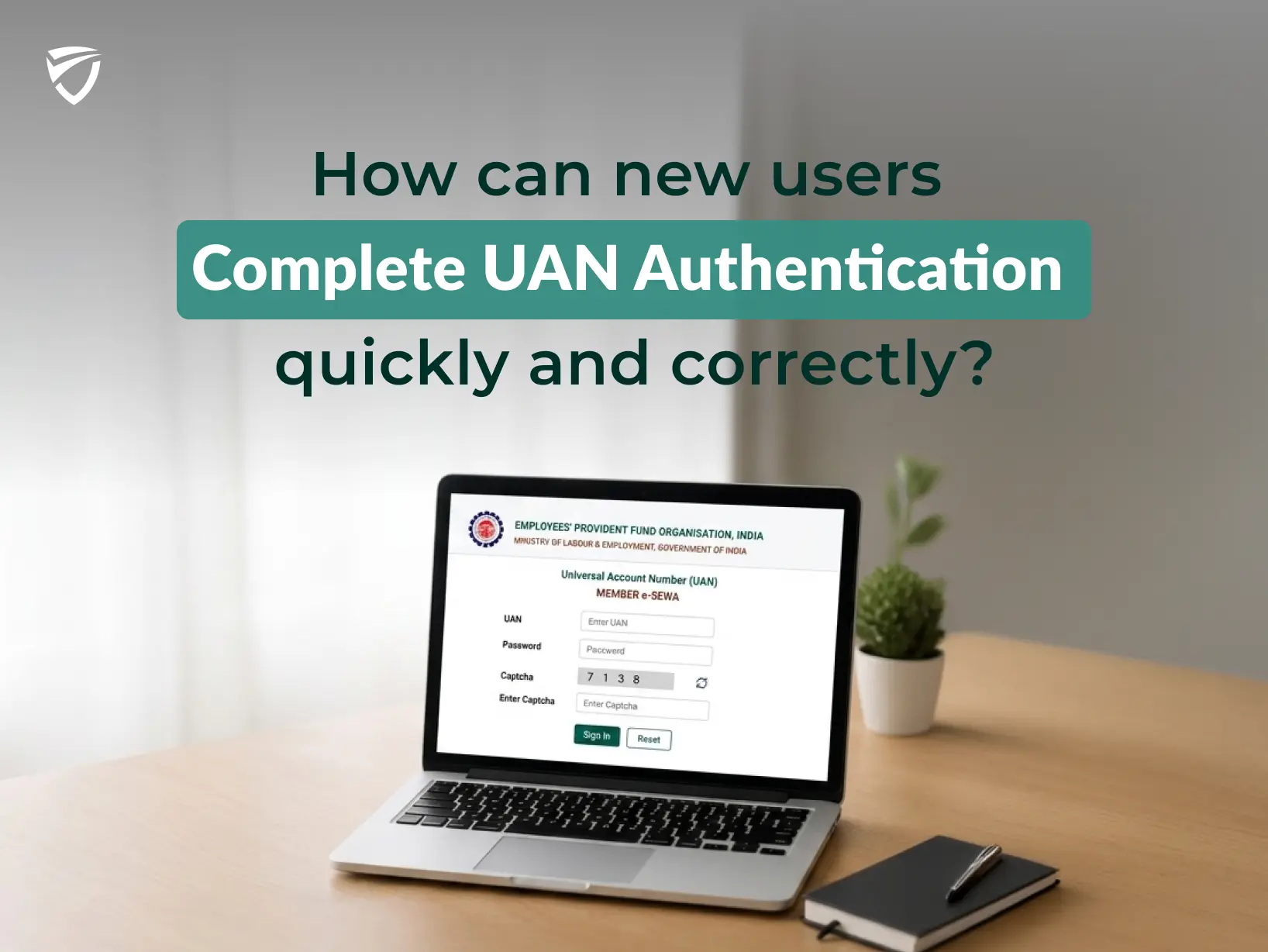
Step 1: User Provides UAN Details
The journey starts when a user enters their UAN and basic details on your platform.
You might collect:
- UAN number
- Mobile number
- PAN details
- Name and/or date of birth
Once entered, this data is securely sent to the authentication API.
Step 2: API Starts the Verification
Next, the EPF UAN Authentication API connects with authorised verification systems and checks the information against EPFO records.
The API typically checks whether:
- The UAN actually exists,
- The UAN format is valid,
- The account is currently active,
All of this happens in real time, usually in just a few seconds. If you also need the full employment trail, EPF UAN History extends the same check into tenures, employers and PF filing status.
Step 3: Identity Matching & Validation
Once verification kicks in, the API compares the user-provided data with trusted records. If everything lines up, the system marks the user as verified.
More advanced fraud-detection workflows may also look for:
- Duplicate or overlapping identities,
- Unusual or suspicious employment patterns,
- Mismatched or incomplete records,
- Inactive or clearly fake UAN submissions.
The deeper analysis helps organisations spot risk early, before onboarding is completed or money is disbursed.
Step 4: Verification Response is Generated
After the checks are done, the API sends a structured response back to your platform. This typically includes:
- Overall verification status (success/failure),
- Confirmation of the linked mobile number,
- Employment validation indicators,
- Authentication and match results.
Your system can then use this response to:
- Approve or reject onboarding,
- Trigger additional checks if needed,
- Or move the user straight to the next step in your journey.
All of this happens seamlessly in the background, creating a smooth and secure experience for new users.
Key Benefits of EPF UAN Authentication API for Businesses
Integrating an EPF UAN authentication API isn't just a technical upgrade; it directly impacts business outcomes.
- Faster Onboarding
Manual employment verification can take hours or even days. With API-based checks, you can reduce this to seconds, helping you onboard customers or employees much faster.
- Lower Fraud Risk
By verifying UAN details in real time, businesses can catch fake employee claims and suspicious profiles before approvals, disbursals, or payouts.
- Better User Experience
New users don't want to upload endless documents, wait for calls, or chase approvals. Instant verification means a shorter, smoother onboarding journey, which directly improves conversions.
- Scalable Infrastructure
As your business grows, manual verification falls apart. It doesn't scale. APIs let you quickly verify hundreds of thousands of users, without excessive onboarding or operational overhead.
- Stronger Compliance
For financial institutions and other regulated sectors, reliable identity verification is non-negotiable. UAN authentication helps strengthen:
- Regulatory compliance,
- Internal audit readiness,
- And long-term risk management.
The Role of AI in Modern Verification
Verification today is about more than just "does this record exist?"
Modern systems use AI-powered fraud intelligence to spot behaviour patterns that don't look right, things a human reviewer might miss.
Platforms like TrueShield.AI, for example, combine:
- Identity verification,
- AI-based anomaly detection,
- Automated compliance workflows.
This allows businesses to:
- Detect unusual or high-risk profiles,
- Reduce onboarding fraud,
- Automate repetitive checks,
- Build a stronger, more trustworthy digital ecosystem.
The shift is clear: we're moving from basic verification to intelligent verification, and that's changing how modern businesses think about risk.
Conclusion
As digital onboarding becomes the default, slow, document-heavy, and manual verification processes simply no longer exist.
EPF UAN Authentication APIs provide a faster, smarter, and more secure way to verify user identities and employment records, especially for new users entering your digital ecosystem.
For fintech platforms, lenders, HR teams, and enterprises, the benefits go far beyond convenience:
- You prevent fraud before it hurts you,
- You improve operational efficiency,
- And you build trust with users at scale.
In a world where identity fraud is evolving quickly, EPF API integration in India is essential.